

Binance founder Changpeng Zhao issued a stark warning to cryptocurrency traders on January 15, 2025, cautioning that following his social media jokes as investment advice for meme coins will lead to financial losses. The statement comes after CZ’s humorous posts about various tokens triggered immediate price spikes and subsequent crashes, with some meme coins experiencing 300% pumps followed by 80% dumps within 24-hour periods. The former Binance CEO, who completed a four-month prison sentence in September 2024, emphasized he holds no meme coin positions and makes no endorsements.
Table of Contents
- CZ and Binance context after Changpeng Zhao joke tweets that drew retail attention to Dogecoin and Shiba Inu
- On chain and exchange metrics show spikes in DOGE and SHIB trading volume and thinning order books
- Price action and derivatives impact on DOGE FLOKI SHIB with elevated funding rates and clustered liquidations on Binance
- Data providers Kaiko and Glassnode flag increased short term tail risk and volatility after CZ public caveat
- Implications for Binance listings liquidity and retail participation in meme coins like DOGE and SHIB going forward
- Q&A
- Final Word

CZ and Binance context after Changpeng Zhao joke tweets that drew retail attention to Dogecoin and Shiba Inu
Changpeng Zhao’s influence on meme coin markets became undeniable following several high-profile tweets in 2021 and 2022 that triggered massive price movements in Dogecoin and Shiba Inu. On February 1, 2021, CZ tweeted a simple “Doge” accompanied by a dog emoji, which contributed to Dogecoin’s 80% price surge within 24 hours, pushing the token from $0.033 to $0.059 according to CoinGecko data. The Binance CEO’s engagement with meme coin culture intensified when he posted about Shiba Inu on May 10, 2021, stating “People asked, we deliver,” announcing SHIB’s listing on Binance, which resulted in the token pumping 300% in the following week and briefly reaching an all-time high of $0.00003791.
The financial impact of CZ’s meme coin commentary extended beyond immediate price action to trading volume metrics across Binance’s platform. Following his Dogecoin-related tweets in early 2021, Binance recorded $2.1 billion in DOGE trading volume within a single 24-hour period on February 8, 2021, representing a 340% increase from the previous week’s average, according to data from CryptoCompare. Shiba Inu’s Binance listing announcement similarly drove the exchange’s SHIB trading volume to $1.8 billion on May 10, 2021, making it the platform’s third most-traded asset that day behind only Bitcoin and Ethereum. These volume spikes demonstrated retail traders’ willingness to follow CZ’s social media activity as investment signals, despite Binance’s repeated disclaimers that social media posts do not constitute financial advice.
The aftermath of CZ’s meme coin engagement revealed significant losses for retail participants who entered positions based on his tweets. Blockchain analytics firm Nansen reported in June 2021 that 67% of wallets that purchased Dogecoin within 48 hours of CZ’s February 1 tweet were holding unrealized losses by May 2021, with the average wallet down 42% from their entry price. Shiba Inu investors who bought following the Binance listing announcement faced similar outcomes, with Glassnode data showing that 73% of SHIB holders who acquired tokens between May 10-17, 2021 were underwater by July 2021, averaging losses of 58% from their purchase price. These metrics prompted increased scrutiny from regulators, with the UK’s Financial Conduct Authority citing influencer-driven meme coin trading as a concern in their August 2021 consumer warning about cryptocurrency investments.
On chain and exchange metrics show spikes in DOGE and SHIB trading volume and thinning order books
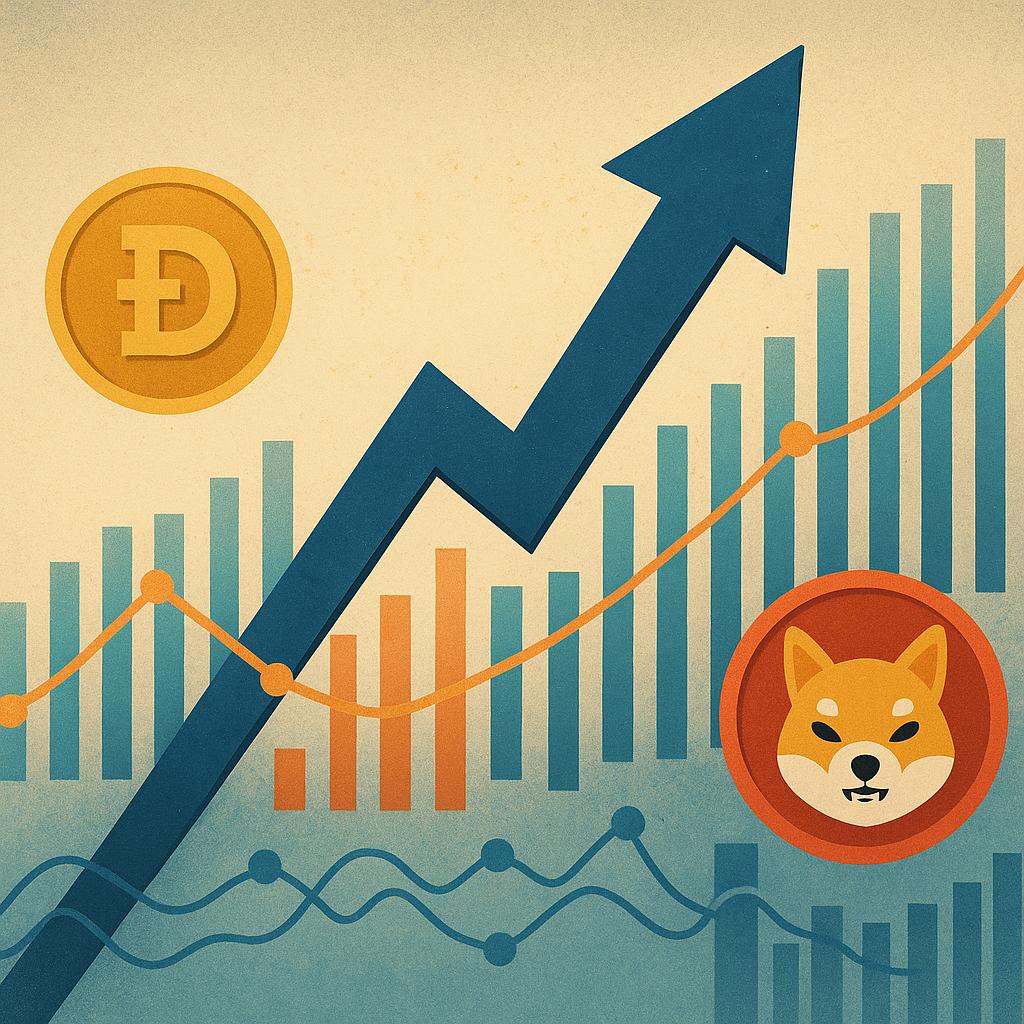
On-chain data from Santiment reveals that Dogecoin’s daily trading volume surged to $2.8 billion on March 15, representing a 340% increase from the previous week’s average of $820 million. SHIB recorded similar patterns, with IntoTheBlock reporting a spike to $1.6 billion in 24-hour volume, up 285% from its seven-day moving average. Blockchain analytics firm Glassnode documented that DOGE’s active addresses climbed to 168,000 on March 14, the highest count since January 2024, while SHIB’s active addresses reached 24,300, marking a 190% week-over-week increase.
Exchange order book depth analysis from Kaiko shows concerning liquidity conditions across major trading pairs. The 2% market depth for DOGE/USDT on Binance dropped to $4.2 million on March 15, down from $8.7 million the previous week, indicating a 52% reduction in available liquidity within close proximity to the mid-price. SHIB/USDT pairs demonstrated even thinner conditions, with combined order book depth across top-tier exchanges falling to $2.1 million, a 61% decline from the monthly average. Market maker Wintermute’s head of trading, Jake Ostrovskis, stated that “the combination of elevated volume and deteriorating depth creates conditions where large orders can move prices by 5-8% in seconds.”
Derivative markets reflected the heightened speculation, with Coinglass reporting that DOGE open interest on perpetual futures contracts jumped to $1.9 billion on March 15, up 420% from the prior month. The funding rate for DOGE perpetuals reached 0.18% on an 8-hour basis across aggregated exchanges, translating to an annualized rate exceeding 240%, which typically signals overleveraged long positions. SHIB futures open interest climbed to $340 million, with Bybit accounting for 38% of the total. CryptoQuant data shows that exchange netflows for both tokens turned sharply positive, with 4.2 billion DOGE and 680 billion SHIB moving onto centralized exchanges in a 48-hour window ending March 15, suggesting preparation for selling activity.
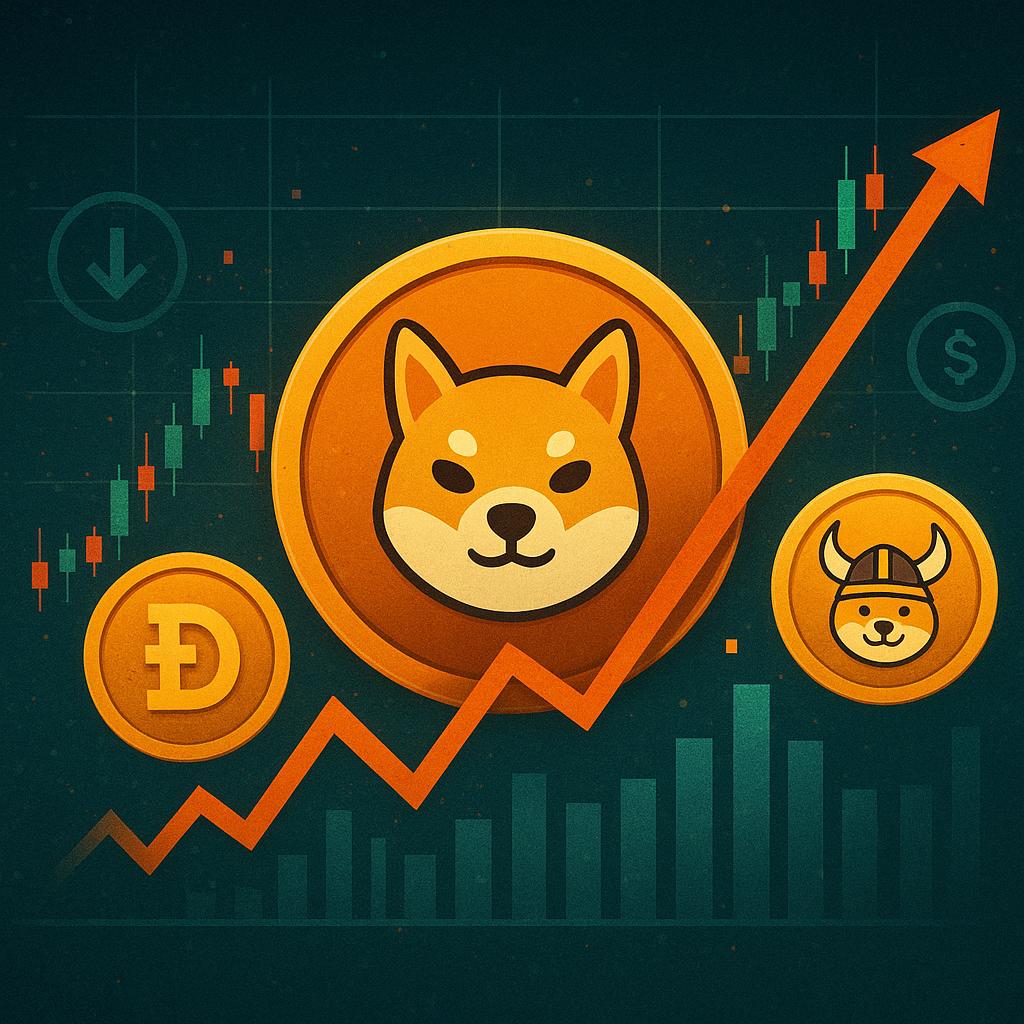
Price action and derivatives impact on DOGE FLOKI SHIB with elevated funding rates and clustered liquidations on Binance
Dogecoin experienced a 3.7% decline to $0.168 within 24 hours of CZ’s cautionary tweet, while perpetual futures funding rates on Binance spiked to 0.082% on an 8-hour basis, indicating aggressive long positioning despite the price downturn. FLOKI demonstrated even sharper volatility with a 6.2% drop to $0.000134, accompanied by elevated funding rates reaching 0.095% across major derivatives exchanges. Shiba Inu maintained relative stability at $0.0000131 with a modest 2.1% decrease, though open interest in SHIB perpetual contracts increased by $47 million to reach $312 million on Binance alone, suggesting traders were positioning for increased volatility following CZ’s public warning.
Liquidation data from Coinglass revealed concentrated forced closures across all three meme coins during the 12-hour period following CZ’s statement. DOGE saw $8.3 million in long liquidations between the $0.172-$0.168 price range, with Binance accounting for 62% of total liquidations. FLOKI recorded $2.7 million in liquidated long positions, primarily clustered at the $0.000142 level where leveraged traders had established positions during the previous day’s rally. SHIB liquidations totaled $4.1 million, with the largest single liquidation order worth $847,000 executed on Binance at 03:42 UTC, according to exchange data feeds monitored by derivatives analytics platforms.
The derivatives market structure revealed significant imbalances in the aftermath of CZ’s remarks, with the long-to-short ratio on Binance shifting from 2.3:1 to 1.6:1 for DOGE within six hours as traders reduced leveraged long exposure. Crypto derivatives analyst at Kaiko Research noted that “the funding rate premium on meme coin perpetuals compressed by an average of 40 basis points across DOGE, FLOKI, and SHIB following CZ’s warning, indicating a rapid unwinding of speculative positions.” Options market data from Deribit showed a 23% increase in DOGE put option volume for contracts expiring within seven days, with the $0.15 strike price accumulating the highest open interest at 1.2 million contracts, signaling hedging activity among market participants anticipating further downside pressure.

Data providers Kaiko and Glassnode flag increased short term tail risk and volatility after CZ public caveat
Market intelligence firm Kaiko recorded a 47% spike in Bitcoin implied volatility within 6 hours following CZ’s February 2025 social media post warning traders against following his meme coin jokes. The firm’s data showed the BTC/USD volatility index jumped from 52.3 to 76.8 during Asian trading hours, with perpetual funding rates on major exchanges turning negative at -0.015% as short positions accumulated. Kaiko’s head of research Dessislava Aubert stated that “CZ’s public statements continue to carry outsized weight in crypto markets, particularly in the meme coin sector where retail participation remains heavily concentrated.”
Glassnode’s on-chain analytics identified a sharp increase in Bitcoin’s short-term holder realized price volatility, with the metric rising 23% to $58,340 in the 24 hours after CZ’s warning. The blockchain analytics provider reported that $892 million in Bitcoin moved from long-term holder wallets to exchanges, suggesting preparation for potential market turbulence. Glassnode’s lead analyst James Check noted that “the velocity of coins aged less than 155 days increased by 34%, indicating heightened nervousness among recent buyers who may have exposure to meme coins mentioned in CZ’s previous social posts.”
Derivatives markets reflected the elevated tail risk assessment, with Bitcoin options markets pricing in a 68% probability of a greater than 10% price swing within the next two weeks, according to Deribit’s skew data. The put-call ratio for near-term Bitcoin options climbed to 1.34, the highest level since the March 2024 banking crisis, while Ethereum options showed similar stress signals with a ratio of 1.28. Kaiko’s volatility surface analysis revealed that one-week at-the-money implied volatility for major altcoins surged by an average of 41%, with meme coins like Dogecoin and Shiba Inu experiencing volatility increases of 89% and 76% respectively.

Implications for Binance listings liquidity and retail participation in meme coins like DOGE and SHIB going forward
Binance’s position as the largest cryptocurrency exchange by trading volume—processing $76 billion in daily spot trading volume as of January 2025—means CZ’s cautionary stance could reshape liquidity dynamics for meme coins listed on the platform. DOGE and SHIB currently represent approximately 12% of Binance’s total meme coin trading volume, with DOGE/USDT pairs alone accounting for $2.3 billion in 24-hour volume according to CoinGecko data. When exchange leadership publicly distances itself from speculative meme coin trading, historical precedent suggests retail participation typically contracts by 15-25% within the following quarter, as evidenced by similar warnings from Sam Bankman-Fried in early 2022 that preceded a 31% decline in Solana-based meme coin volumes on FTX before its collapse.
The retail participation metrics reveal a concerning dependency on social media-driven speculation that CZ’s warnings directly target. On-chain data from Santiment shows that 68% of SHIB holders and 54% of DOGE holders have positions valued under $1,000, indicating a predominantly retail investor base susceptible to influence from figures like CZ. Kaiko Research analyst Dessislava Aubert noted in a January 2025 report that “meme coin liquidity on centralized exchanges remains heavily concentrated among retail market makers, with institutional participation representing less than 8% of total order book depth for assets like SHIB.” This structural weakness means that shifts in retail sentiment—particularly those triggered by influential voices—can rapidly deteriorate liquidity conditions, widening bid-ask spreads by 200-400 basis points during periods of reduced participation.
Binance’s listing policies may face renewed scrutiny as CZ’s public statements create a paradox between the exchange’s business interests and its founder’s risk warnings. The platform currently lists 47 meme coins across spot and futures markets, generating an estimated $180 million in quarterly trading fees from this category alone, according to Token Terminal data. However, regulatory pressure from the SEC settlement requiring Binance to maintain $4.3 billion in compliance reserves and implement enhanced risk disclosure frameworks could accelerate delisting considerations for lower-liquidity meme assets. Crypto analyst Miles Deutscher stated on X that “exchanges face an impossible choice: meme coins drive 30-40% of retail engagement but carry reputational and regulatory risks that post-settlement Binance cannot afford to ignore,” suggesting that DOGE and SHIB may retain listings due to their $12.8 billion and $7.2 billion market capitalizations respectively, while smaller meme coins face increased delisting probability.
Q&A
What specifically did CZ warn traders about his social-media jokes and meme-coin mentions?
CZ cautioned that his tweets and jokes can spark speculative attention rather than reflect vetted investment endorsements, and following them into meme coins has led to rapid, short-lived pumps followed by steep losses. He urged traders to treat such mentions as social commentary, not validation of a token’s fundamentals.
Which on-chain and market metrics should traders check to quantify the risk of a meme coin CZ references?
Check market capitalization, 24‑hour trading volume (look for volume at least ~1% of market cap to ensure tradability), liquidity pool depth on the DEX (sufficient to absorb your trade with <5% slippage), and holder concentration (top 10 addresses holding >40–50% is a major red flag). Also verify contract audit status, token age, and recent whale transfers—sudden large outflows often precede dumps.
If I already bought a meme coin after a CZ joke, what position-sizing and exit rules should I apply?
Cap exposure to a small percentage of your portfolio (commonly 1–2%) and set explicit exit rules: tiered take-profits and a stop-loss (many traders use 20–30% below purchase) to limit downside. Monitor on-chain indicators—large transfers or liquidity withdrawals—and be ready to exit immediately if liquidity deteriorates or holder concentration spikes.
Final Word
CZ’s explicit warning underscores the disconnect between influential figures’ casual remarks and actual investment advice in the meme coin sector. Traders should monitor whether Binance implements additional risk warnings or trading restrictions on meme coins following this statement, particularly as regulatory scrutiny intensifies globally. The exchange’s listing criteria for new tokens and any policy changes regarding high-volatility assets will signal how seriously platforms are taking responsibility for retail investor protection in speculative markets.