


Doge Coin Investment: Navigating the Meme, the Mania, and the Market
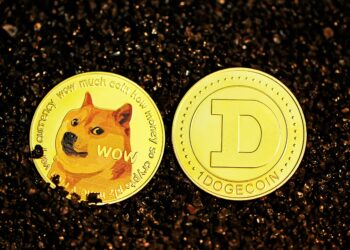
In the often-serious and complex world of cryptocurrency, one digital asset stands out for its whimsical origins and unpredictable journey: Dogecoin. What began as a lighthearted joke in 2013, featuring the iconic Shiba Inu dog from the "Doge" meme, has evolved into a cultural phenomenon and a serious, albeit volatile, topic of discussion for investors. A Doge coin investment is not a straightforward proposition; it is a unique case study that sits at the intersection of community power, celebrity influence, and the raw speculation that defines much of the crypto landscape. This article delves deep into the history, mechanics, driving forces, and future considerations of investing in Dogecoin, exploring its price history, intrinsic value debates, and the ever-present challenge of making a reliable prediction about its trajectory.
From Internet Joke to Market Juggernaut: The Origins of Dogecoin
To understand Dogecoin as an investment, one must first appreciate its unconventional genesis. Created by software engineers Billy Markus and Jackson Palmer, Dogecoin was intended as a satire of the wild speculation surrounding Bitcoin and the proliferation of altcoins at the time. Its code was forked from Litecoin, and it adopted a Scrypt-based proof-of-work algorithm, making it more accessible for mining on consumer-grade hardware than Bitcoin.


The founders infused the project with a spirit of fun and generosity. The community, which quickly formed around the coin on platforms like Reddit, embraced this ethos. They began using Dogecoin to tip content creators online and fund charitable causes, most famously sponsoring the Jamaican bobsled team to go to the 2014 Winter Olympics and funding a well in Kenya. This "fun-friendly" and philanthropic identity became Dogecoin's core differentiator, building a loyal, passionate base that valued community over pure profit—at least initially.


The Mechanics: Understanding the Tokenomics of DOGE
Unlike Bitcoin, which has a hard cap of 21 million coins, Dogecoin was initially designed with a 100 billion coin supply cap. However, a critical decision was made early on: that cap was removed. Dogecoin now has an inflationary supply model. A fixed amount of 10,000 DOGE is mined every minute (approximately 5.2 billion new coins per year). This means that while the inflation rate as a percentage of the total supply decreases over time, there is no ultimate scarcity built into its protocol.
For investors, this is a fundamental point. Traditional value stores like Bitcoin are often compared to "digital gold" due to their scarcity. Dogecoin's endless supply runs counter to this narrative. Its value is not derived from programmed scarcity but from other factors, primarily utility, adoption, and sentiment. The inflationary model is designed to encourage spending and tipping rather than hoarding, staying true to its original use-case vision.
The Elon Musk Effect and the 2021 Supercycle
For years, Dogecoin traded at a fraction of a cent, beloved by its niche community but largely ignored by the broader financial world. This changed dramatically in 2020-2021, catalyzed by one individual: Elon Musk. The CEO of Tesla and SpaceX began tweeting about Dogecoin, calling it "the people's crypto" and his "favorite cryptocurrency." His immense influence, combined with a retail trading frenzy fueled by platforms like Robinhood and a broader bull market in crypto, sent Dogecoin's price on a parabolic ascent.
From under $0.01 in early 2020, DOGE skyrocketed to an all-time high of approximately $0.74 in May 2021—a gain of over 12,000% at its peak. This period transformed Dogecoin from a meme into a multi-billion dollar market cap asset. The investment thesis during this time was less about technology or scarcity and almost entirely about momentum, social media hype, and the prediction that major companies might adopt it as a payment method (a possibility Musk frequently hinted at). The line between a community-driven joke and a serious speculative asset had been irrevocably blurred.
Analyzing the Investment Case: The Bull and Bear Perspectives
Any potential Doge coin investment requires a clear-eyed view of the arguments for and against it.
The Bull Case:
- Unmatched Brand Recognition and Community: Dogecoin possesses one of the strongest brands in all of cryptocurrency. The friendly, approachable Doge meme is instantly recognizable, lowering the barrier to entry for new crypto users. Its community, while changed since the 2021 mania, remains one of the largest and most vocal, capable of driving significant attention and buying pressure.
- Potential for Payments and Adoption: The inflationary model and fast block times (1 minute) make Dogecoin theoretically suitable for small, everyday transactions. Proponents argue it functions better as a "digital currency" than a "digital gold." High-profile acceptance, even if sporadic, by companies like the Dallas Mavericks, Newegg, and even Tesla for some merchandise, lends credence to this utility.
- The "Musk Factor": As long as Elon Musk maintains his interest, Dogecoin will have a powerful, albeit unpredictable, advocate. His ability to move markets with a single tweet or public appearance cannot be discounted in any short-to-medium-term prediction.
- The "Underdog" Narrative: There is a persistent cultural appeal to the idea of a joke currency "beating" the established financial system. This narrative can fuel retail investor interest during market upswings.
The Bear Case:
- Lack of Technical Innovation: Dogecoin's codebase is not at the forefront of blockchain innovation. It lacks the smart contract functionality of Ethereum, the scalability research of Solana, or the privacy features of Monero. Its development is relatively slow and conservative.
- Inflationary Supply: The constant issuance of new coins creates persistent sell pressure from miners and a structural headwind against price appreciation driven by scarcity alone. It must attract substantial new demand each year just to maintain its value.
- Concentration of Holdings: A significant percentage of Dogecoin's supply is held in a small number of wallets. This concentration means that large holders, or "whales," can have an outsized impact on the market by moving their funds.
- Dependence on Sentiment and Hype: Dogecoin's price is exceptionally correlated with social media trends and celebrity endorsements. This makes it highly volatile and vulnerable to rapid downturns when the hype cycle ends or sentiment shifts. Its value is arguably more tied to collective belief than to measurable fundamentals.
The Perilous Art of Dogecoin Price Prediction
Making a prediction about Dogecoin's future price is arguably more challenging than for many other digital assets. Traditional financial models based on discounted cash flows or network metrics are largely inapplicable. Instead, analysts often rely on:
- Technical Analysis (TA): Chartists examine historical price patterns, trading volume, and indicators like moving averages and the Relative Strength Index (RSI) to identify potential support, resistance, and trend directions. However, TA is often overwhelmed by sudden news events in Dogecoin's case.
- Social Sentiment Analysis: Tracking mentions, engagement, and sentiment on Twitter, Reddit (r/dogecoin), and TikTok can provide a gauge of retail investor interest. A surge in positive sentiment often precedes or accompanies price rallies.
- On-Chain Analytics: While not as rich as for Bitcoin or Ethereum, data on whale wallet movements, exchange inflows/outflows, and network growth can offer clues about accumulation or distribution phases.
- The Macro and Crypto Market Context: Dogecoin does not trade in a vacuum. Its price is heavily influenced by the overall health of the crypto market, which in turn is affected by Bitcoin's performance, regulatory news, and global macroeconomic conditions like interest rates and inflation.
Most long-term prediction models are highly speculative. They range from forecasts of DOGE returning to its all-time high or even reaching $1 in a future bull market, to warnings of it slowly fading into irrelevance as the novelty wears off. The truth will likely lie somewhere in between, dictated by the next cycle of market mania, the actions of key influencers, and any unforeseen developments in its adoption or technology.
Practical Considerations for the Potential Investor
If, after weighing the risks, one considers a Doge coin investment, several prudent steps are essential:
- Treat it as High-Risk Speculation, Not a Core Holding: Allocate only capital you are prepared to lose entirely. Dogecoin should occupy the high-risk, high-potential-reward portion of a diversified portfolio, not its foundation.
- Understand the Volatility: Be psychologically prepared for extreme swings. A 20-30% move in a single day is not uncommon. This requires a strong stomach and a clear strategy.
- Secure Your Holdings: If you buy a meaningful amount, do not leave it on an exchange. Transfer your DOGE to a self-custody wallet where you control the private keys, such as a reputable hardware wallet.
- Have an Exit Strategy: Decide in advance under what conditions you will take profits or cut losses. Emotional trading during a hype-driven pump or a fear-driven dump is a recipe for losses.
- Stay Informed, But Skeptical: Follow the news, Musk's tweets, and community developments, but maintain a critical distance. Differentiate between substantive news (e.g., a major exchange listing, a significant merchant adoption) and pure hype.
The Future: Beyond the Meme
The long-term trajectory of Dogecoin hinges on its ability to evolve. Can it transition from being primarily a "meme coin" to a genuinely useful and widely adopted digital currency? This would likely require:
- Sustained Development: While the core development team is small, continued updates to improve security, efficiency, and potentially layer-2 solutions for scaling would be beneficial.
- Broader, Stable Merchant Adoption: Moving beyond one-off promotions to consistent, everyday acceptance by a wide array of businesses.
- Managing the Inflation: The community may one day reconsider its inflationary model, though any such change would be a monumental and controversial decision.
- Surviving Market Cycles: Maintaining its community and relevance through the inevitable bear markets that follow bull runs.
Conclusion: A Unique Asset in a Digital Frontier
A Doge coin investment is unlike any other in the financial world. It is a bet on the power of internet culture, the enduring strength of community, and the unpredictable nature of viral phenomena, as much as it is a bet on blockchain technology. Its value is a complex cocktail of utility, sentiment, and celebrity endorsement, making any prediction fraught with uncertainty.
For the informed speculator who understands the risks, has a high tolerance for volatility, and views it as a small piece of a broader strategy, Dogecoin represents a fascinating, high-stakes experiment in what gives an asset value in the digital age. For others, it may serve as a cautionary tale about the power of hype. Whether it ultimately fades into history as a charming footnote or matures into a lasting digital currency, Dogecoin has already cemented its place as the unforgettable, shiba inu-faced disruptor that proved even a joke can shake the foundations of finance.
Frequently Asked Questions
Frequently Asked Questions About Dogecoin Investment
1. What is Dogecoin and how does it work?
Dogecoin (DOGE) is a decentralized, peer-to-peer digital cryptocurrency that was originally created as a lighthearted joke in 2013. It operates on its own blockchain, using a proof-of-work consensus mechanism similar to Litecoin. It is designed to facilitate fast, low-cost online transactions.
2. Is Dogecoin a good long-term investment?
Dogecoin is considered a highly volatile and speculative asset. Its price is heavily influenced by social media trends and celebrity endorsements rather than just fundamental utility. While it has potential for high returns, it also carries significant risk, making it unsuitable as a core, long-term investment for most conservative portfolios.
3. How can I buy and store Dogecoin?
You can purchase Dogecoin on most major cryptocurrency exchanges, such as Binance, Coinbase, and Kraken, by trading fiat currency or other cryptocurrencies for it. After purchasing, you should store your DOGE in a secure wallet, either a reputable software wallet (like Trust Wallet) or a hardware wallet (like Ledger) for maximum security.
4. What are the main risks of investing in Dogecoin?
The primary risks include extreme price volatility, its reliance on community sentiment and hype, potential regulatory changes affecting all cryptocurrencies, and competition from thousands of other digital assets. Unlike projects like Ethereum, Dogecoin's development and long-term roadmap are less focused on expanding its technological utility.