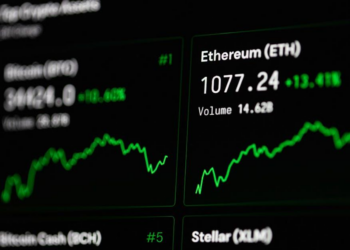



Amid ongoing market volatility, Ethereum continues to face significant selling pressure from institutional investors, often referred to as “smart money.” Recent analysis of futures market data reveals a substantial bearish trend, with the Cumulative Volume Delta (CVD) indicating approximately $5.7 billion in net selling. This development raises key questions about the short- to medium-term outlook for Ethereum, as market participants closely monitor whether the smart money’s bearish stance signals deeper challenges ahead for the cryptocurrency.
Smart Money Activity Indicates Continued Ethereum Selling Pressure
The latest data from futures market cumulative volume delta (CVD) reveals a substantial bearish sentiment among institutional investors, commonly referred to as “smart money.” With an estimated $5.7 billion in net selling pressure, these key market participants appear to be offloading Ethereum positions, anticipating potential downside risks in the near term. This activity coincides with increased volatility and key technical levels being tested, signaling a cautious approach despite Ethereum’s broader market resilience.

Key indicators of smart money selling pressure include:


- Consistent negative futures CVD values across top exchanges
- Rising open interest coupled with declining spot prices
- Increased volume in short positions among whales and hedge funds
| Metric | Value | Change (7d) |
|---|---|---|
| Futures CVD | -$5.7B | -12% |
| Open Interest | $18.3B | +4% |
| Spot Volume | $9.1B | -8% |

Analyzing Futures CVD Data Reveals Significant Bearish Sentiment
Recent analysis of the futures cumulative volume delta (CVD) for Ethereum unveils a notable shift towards bearish positioning among institutional players. Throughout the past trading sessions, the data highlights consistent net selling pressure, amounting to an estimated $5.7 billion. This trend is reflected in the disproportionate volume of short contracts exceeding long positions, suggesting that smart money is actively capitalizing on expected downward momentum.
The breakdown of futures CVD metrics reveals key indicators supporting this sentiment:
- Increase in Open Interest: Growth in open interest combined with falling prices indicates fresh bearish bets.
- Volume Concentration: High trading volume centered on short futures contracts signifies confidence in price correction.
- Delta Shift: A persistent negative cumulative delta underpins sustained selling pressure over the examined timeframe.
| Metric | Value | Interpretation |
|---|---|---|
| Futures Open Interest | +12.4% | Rising activity amid bearish bias |
| Net CVD Volume | -$5.7B | Dominant sell-side flows |
| Price Change (7-day) | -8.2% | Confirmed bearish momentum |

Implications for Ethereum Investors Amidst Persistent Selling Trends
Ethereum investors face a complex scenario as the ongoing bearish momentum signals that influential market participants, often labeled as “smart money,” continue to offload their positions. The persistent futures CVD data revealing $5.7 billion in sell-side pressure suggests a cautious or negative sentiment among institutional players. This trend may lead to increased volatility and could challenge bullish narratives predicated on Ethereum’s upgrade cycles or decentralized finance expansion.
Key considerations for investors include:
- Monitoring liquidation rates: Sudden spikes could accelerate downward price moves.
- Evaluating entry points cautiously: Shorts may dominate, increasing risk for new long positions.
- Assessing market depth: Reduced buying interest from smart money may hinder strong price recoveries.
| Metric | Current Status | Impact |
|---|---|---|
| Futures CVD | -$5.7B (Bearish) | Indicates continued selling pressure |
| Open Interest | Stable | Neutral to slight bearish bias |
| Funding Rates | Negative | Costly for long positions |
Strategic Recommendations for Navigating Ethereum’s Bearish Market Dynamics
In light of the persistent bearish momentum signaled by Ethereum futures’ CVD metrics, investors should consider adopting a cautious yet opportunistic approach. Risk management becomes paramount—employ stop-loss orders and reduce exposure in highly volatile positions. Diversification across multiple assets and time horizons can help mitigate potential downturns, especially during periods marked by significant smart money unwinding. Furthermore, monitoring on-chain metrics such as large wallet transactions and derivatives activity provides critical insights into evolving market sentiment.
Strategically, traders might also benefit from leveraging hedging instruments like options or inverse exchange-traded products to protect portfolios. Staying disciplined with profit-taking tactics and avoiding chasing price rallies ensures capital preservation amid uncertain conditions. Below is a brief overview of recommended tactical moves:
- Implement trailing stops to lock in gains during rebounds
- Allocate a portion of holdings to stablecoins or less correlated assets
- Use dollar-cost averaging to gradually accumulate on dips
- Track funding rates and CVD to time entries and exits more effectively
| Tactic | Benefit |
|---|---|
| Trailing Stops | Protects profits during market recovery |
| Diversification | Reduces overall portfolio risk |
| Dollar-Cost Averaging | Smooths entry price and mitigates timing risk |
| Monitoring CVD & Funding Rates | Enhances precision in trade execution timing |
Key Takeaways
In conclusion, the persistent bearish signals highlighted by the $5.7 billion sell-off in Ethereum futures CVD underscore ongoing cautious sentiment among institutional investors. While Ethereum continues to be a key player in the crypto market, smart money’s sustained selling activity suggests that market participants remain wary amid current volatility and macroeconomic uncertainties. As the situation evolves, close attention to futures data and on-chain indicators will be essential for gauging the next major move in Ethereum’s trajectory.