

Solfart Memecoin vs. Other Cryptocurrencies: A Gassy Disruption or Just Hot Air?
The cryptocurrency landscape is a perpetual storm of innovation, speculation, and, increasingly, unadulterated internet culture. While Bitcoin and Ethereum established the foundational pillars of decentralized value and programmable contracts, a new, more irreverent breed of digital asset has exploded onto the scene: the memecoin. Riding the waves of social media hype and community fervor, these tokens often begin as jokes but can evolve into serious financial phenomena. Among this colorful cast of characters, a new contender has emerged with a name that’s as audacious as its premise: Solfart. In the crowded arena of popular crypto projects, how does a token like Solfart stack up against the established giants and its fellow memecoin rivals? Is it a legitimate, if humorous, investment in a burgeoning ecosystem, or merely a fleeting puff of speculative gas?
To understand Solfart’s position, we must first dissect the very nature of the markets it seeks to disrupt. The world of crypto is broadly stratified into several distinct layers, each with its own value proposition and audience.


The Titans: Bitcoin and Ethereum – The Bedrock of Crypto
At the summit sit Bitcoin and Ethereum. Bitcoin, the original cryptocurrency, is digital gold—a decentralized store of value and a hedge against traditional financial systems. Its primary narrative is scarcity, security, and adoption as a global reserve asset. Ethereum, meanwhile, is a decentralized world computer. Its value is derived from its utility as a platform for thousands of other tokens, decentralized applications (dApps), and now, through its transition to proof-of-stake, a more environmentally sustainable ecosystem for the future of finance and the internet.

Investing in these titans is often seen as a bet on the long-term viability of blockchain technology itself. They are relatively less volatile (by crypto standards) and are backed by vast developer communities, institutional investment, and real-world use cases. When someone speaks of investing in popular crypto assets with foundational strength, they are invariably referring to this tier.
The Altcoin Ecosystem: Utility, Scalability, and Specialization
Beneath the giants exists the vast universe of altcoins. These include projects like Cardano (ADA), Solana (SOL), Polkadot (DOT), and Avalanche (AVAX). Their value propositions are technical: faster transaction speeds, lower fees, novel consensus mechanisms, or interoperability between different blockchains. Solana, in particular, is relevant to our discussion, as it is the blockchain upon which Solfart is built. Solana’s claim to fame is its incredible speed and low cost, making it an ideal breeding ground for high-throughput applications and, as it turns out, a frenzy of memecoin activity.
These projects are evaluated on their technology, roadmap, team credentials, and partnerships. Investment here is a bet on a specific technical solution winning market share in the future of web3. The conversation is dominated by whitepapers, GitHub repositories, and validator networks.
The Memecoin Phenomenon: Culture, Community, and Chaos
And then, there’s the memecoin dimension. Originating with the legendary—and infinitely controversial—Dogecoin, which started as a literal joke featuring a Shiba Inu dog, memecoins derive their value almost exclusively from community sentiment, social media virality, and cultural relevance. Dogecoin’s successor, Shiba Inu (SHIB), demonstrated the staggering potential of this model, turning microscopic investments into life-changing sums for early adopters and creating a fervent, decentralized community of "Shib Army" supporters.
The memecoin playbook is simple yet powerful:
- A Relatable Meme: A catchy, humorous, or absurd concept (a dog, a frog, or in this case, a playful bodily function).
- Low Barrier to Entry: Extremely low initial price points, allowing investors to own millions or billions of tokens.
- Social Media Rocket Fuel: Relentless promotion on platforms like Twitter, TikTok, and Reddit, creating a sense of FOMO (Fear Of Missing Out) and collective mission.
- Community as Utility: The primary "use case" is belonging to the community. The token is the membership badge.
Memecoins are the populist revolt against the sometimes overly serious, jargon-filled world of traditional crypto. They are high-risk, high-reward speculative assets where fundamentals are often discarded in favor of vibes and momentum.
Enter Solfart: A Case Study in Solana’s Memecoin Mania
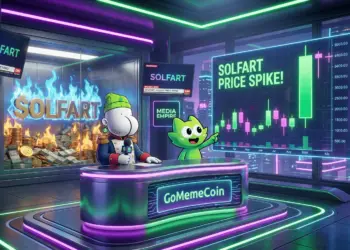
This brings us to Solfart. As the name cheekily implies, Solfart is a memecoin native to the Solana blockchain. Its existence is a direct product of Solana’s technical advantages: near-instantaneous and virtually fee-less transactions allow for the rapid trading and speculation that memecoin ecosystems thrive on. Unlike launching a token on Ethereum, where gas fees can sometimes exceed the investment itself, Solana allows anyone to spin up and trade tokens with minimal cost.
Solfart positions itself within this hyper-competitive niche. It isn’t promising to revolutionize smart contracts or build a new decentralized internet. Its proposition is cultural: to build a loud, proud, and engaged community around a universally understood (if slightly juvenile) concept. The narrative is one of inclusivity and fun, leveraging the speed of Solana to create a fast-paced, engaging experience for holders.
How Solfart Compares to Other Memecoins
- Vs. Dogecoin (DOGE): Dogecoin is the grandfather, with the first-mover advantage and the unparalleled celebrity endorsement of figures like Elon Musk. It operates on its own, simpler blockchain. Solfart, however, benefits from the modern, high-performance infrastructure of Solana. While DOGE has brand recognition, Solfart offers the technical efficiency of a newer generation.
- Vs. Shiba Inu (SHIB): SHIB built an entire ecosystem on Ethereum, including a decentralized exchange (ShibaSwap) and aspirations for a metaverse project. It attempted to add utility post-hoc. Solfart is, at least initially, a purer cultural play. Its potential lies in whether its community can organically build similar utility around the core meme, leveraging Solana’s dApp ecosystem.
- Vs. Other Solana Memecoins (e.g., Bonk, Dogwifhat): Here, the competition is most direct. Tokens like Bonk (which pioneered the Solana memecoin airdrop) and Dogwifhat (driven by an iconic image of a dog in a knit hat) have set a high bar for viral success. For Solfart to stand out, it must cultivate a community that is more creative, more persistent, and more effective at spreading its meme than its direct rivals. It’s a battle for attention on the same blockchain, using the same social media tools.
The Fundamental Divergence: Utility vs. Virality
This is the core of the debate. When comparing Solfart to other cryptocurrencies, we are comparing two fundamentally different asset classes.
A project like Ethereum or Cardano is valued on its technical merit and adoption. Metrics include:
- Total Value Locked (TVL) in its DeFi protocols.
- Number of daily active developers.
- Transaction volume and network activity.
- Institutional partnerships and real-world integrations.
Solfart, like most memecoins, is valued on its cultural capital and community strength. Metrics include:
- Social media mentions, follower growth, and engagement rates.
- Trading volume and liquidity pool depth on decentralized exchanges.
- The creativity and reach of its user-generated content (memes, videos, art).
- Celebrity or influencer endorsements.
To criticize a memecoin for lacking a whitepaper is to miss the point entirely. Its whitepaper is the collective timeline of its community on social media. Its roadmap is written by the whims of the crowd.
The Risks and Rewards: A Stark Contrast
Investing in a foundational popular crypto like Bitcoin or Ethereum carries risk, but it is largely tied to macro-financial conditions, regulatory shifts, and technological hurdles. The assumption is that the underlying technology has enduring value.
Investing in a memecoin like Solfart is an exercise in extreme volatility and risk. The potential rewards are legendary—stories of thousand-fold returns are what fuel the dream. However, the risks are equally monumental:
- Hyper-Speculation: Price is almost entirely driven by sentiment, which can reverse in minutes.
- Liquidity Issues: Many memecoins have shallow liquidity, meaning large sells can crater the price.
- "Rug Pulls" and Scams: The ease of creation makes Solana a haven for malicious developers who abandon projects after stealing investor funds.
- The Fade Factor: Internet culture is fickle. Today’s hilarious meme can be tomorrow’s forgotten cringe.
Conclusion: Coexisting in a Multi-Layered Crypto Universe
The question of Solfart memecoin vs. other cryptocurrencies is not a question of which is "better." It is a recognition that the crypto universe has expanded to accommodate vastly different forms of value.
The established cryptocurrencies are the infrastructure—the highways, banks, and contracts of the digital future. They are long-term, foundational bets. Memecoins like Solfart are the cultural events, the viral sensations, and the community rallies that occur on top of that infrastructure. They are a testament to the democratizing, chaotic, and deeply human force that blockchain technology has unleashed.
Solfart represents the spirit of Solana’s ecosystem: fast, cheap, and unafraid to have fun. Its success or failure will not hinge on solving the blockchain trilemma, but on its ability to capture the imagination, foster a dedicated community, and ride the unpredictable waves of online culture. For the investor, this means a crucial choice: are you building a portfolio based on the pillars of the next internet, or are you participating in the thrilling, risky theater of communal speculation?
In the end, a mature crypto portfolio may have room for both: a solid foundation of bedrock assets and a small, speculative allocation to the cultural fireworks of tokens like Solfart. The former offers a stake in the future of technology; the latter offers a stake in the unpredictable, exhilarating, and often hilarious pulse of the internet itself. Just remember, in the world of memecoins, what goes up with the force of a rocket can often descend with the subtlety of a… well, you get the idea.
Frequently Asked Questions
Frequently Asked Questions (FAQ)
1. What is Solfart, and how is it different from a standard cryptocurrency like Bitcoin?
Solfart is a memecoin, a type of cryptocurrency primarily driven by community, internet culture, and humor, often with less emphasis on utility. Bitcoin is designed as a decentralized digital currency and store of value. The key difference is intent: Solfart's value is largely speculative and community-based, while Bitcoin aims to be a peer-to-peer electronic cash system and "digital gold."
2. Why would someone invest in a memecoin like Solfart instead of an established crypto like Ethereum?
Investing in a memecoin like Solfart is typically considered a high-risk, high-reward speculation based on viral trends and community momentum. In contrast, investing in Ethereum often involves belief in its underlying technology, smart contract platform, and long-term ecosystem. Memecoins are generally for short-term trading sentiment, while established cryptocurrencies are often viewed as longer-term technological bets.
3. Is Solfart more volatile than other major cryptocurrencies?
Yes, typically. Memecoins like Solfart are known for extreme price volatility. Their value can surge or plummet rapidly based on social media trends, influencer mentions, or market sentiment, often with little connection to fundamental utility. Major cryptocurrencies like Bitcoin and Ethereum, while still volatile, tend to be more influenced by broader market and adoption trends.
4. What are the main risks of buying Solfart compared to other crypto assets?
The main risks include higher potential for scams or "rug pulls," significantly greater price volatility, lower liquidity, and a reliance purely on speculative hype rather than technological development or real-world use cases. Established cryptocurrencies carry market and regulatory risks but are generally backed by more robust networks, development teams, and clearer (if evolving) use cases.